
ARTICLE 03 · 8 MIN READ
API-First Development: How to Build a SaaS Product That Can Scale
A SaaS product rarely becomes difficult to maintain because it couldn't handle a million users on day one. The real problem usually appears much earlier. Every new feature becomes harder to build. The frontend depends on backend implementation details. Integrations require custom work. Business rules appear in multiple places.
Eventually, changing one part of the product starts breaking another. That's an architecture problem.
API-first development helps prevent this by creating clear boundaries between the parts of your product before complexity starts accumulating. But API-first doesn't mean building twenty microservices for an MVP. It means designing stable interfaces so your SaaS product can change without everything becoming tightly coupled.
What Is API-First Development?
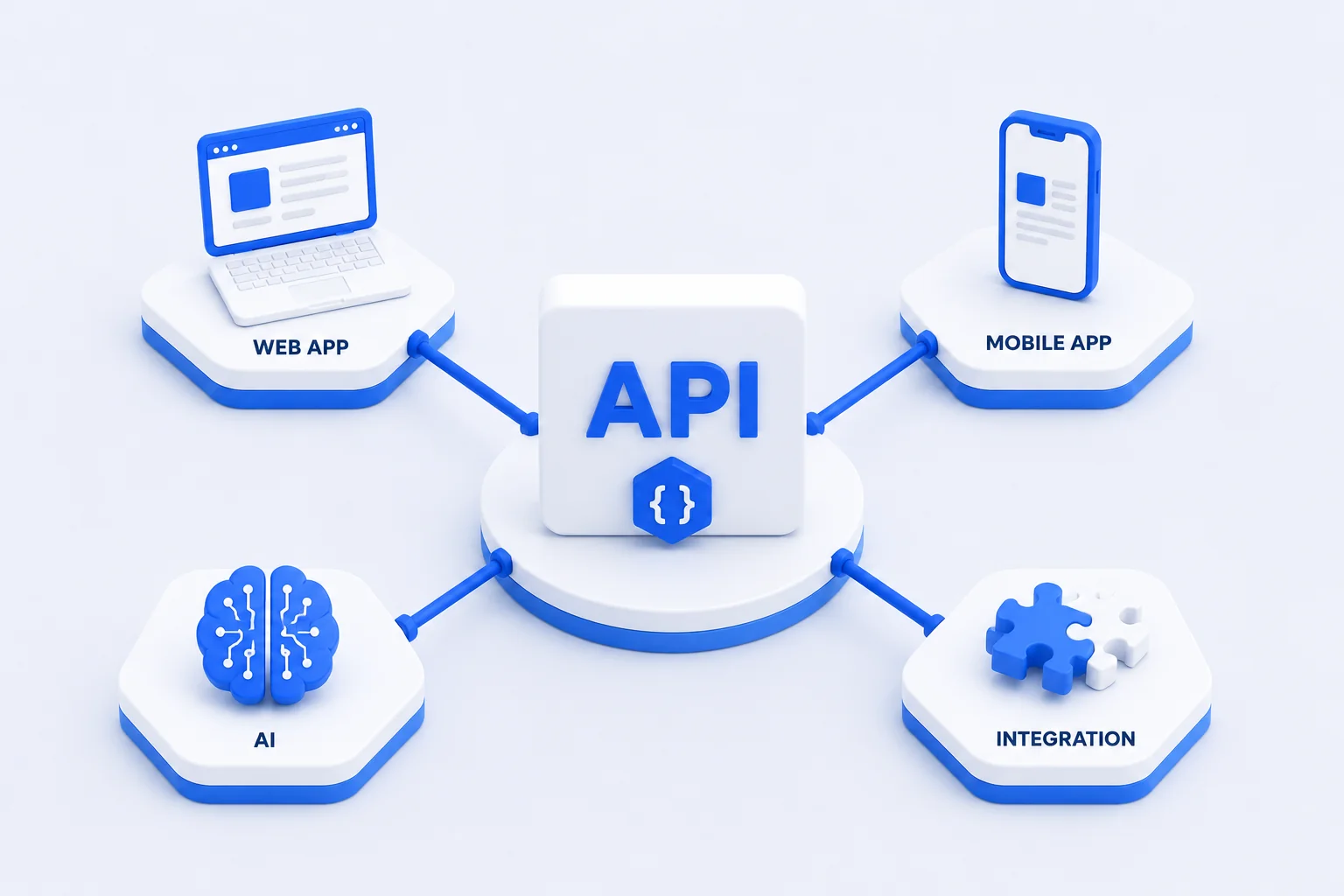
API-first development means treating the API as a core part of product design rather than something added after the application has already been built. Instead of tightly coupling your frontend to backend implementation details, you create a clear interface: Web App → API → Business Logic → Data.
Later, other clients can use the same capabilities: mobile apps, partner integrations, internal tools, and AI agents. The API becomes a contract between different parts of the system. The implementation behind that contract can change without forcing every client to change with it. You might replace a database, restructure backend code, or change an external provider — if the API contract remains stable, the rest of the product doesn't necessarily need to know.
API-First Doesn't Mean Microservices
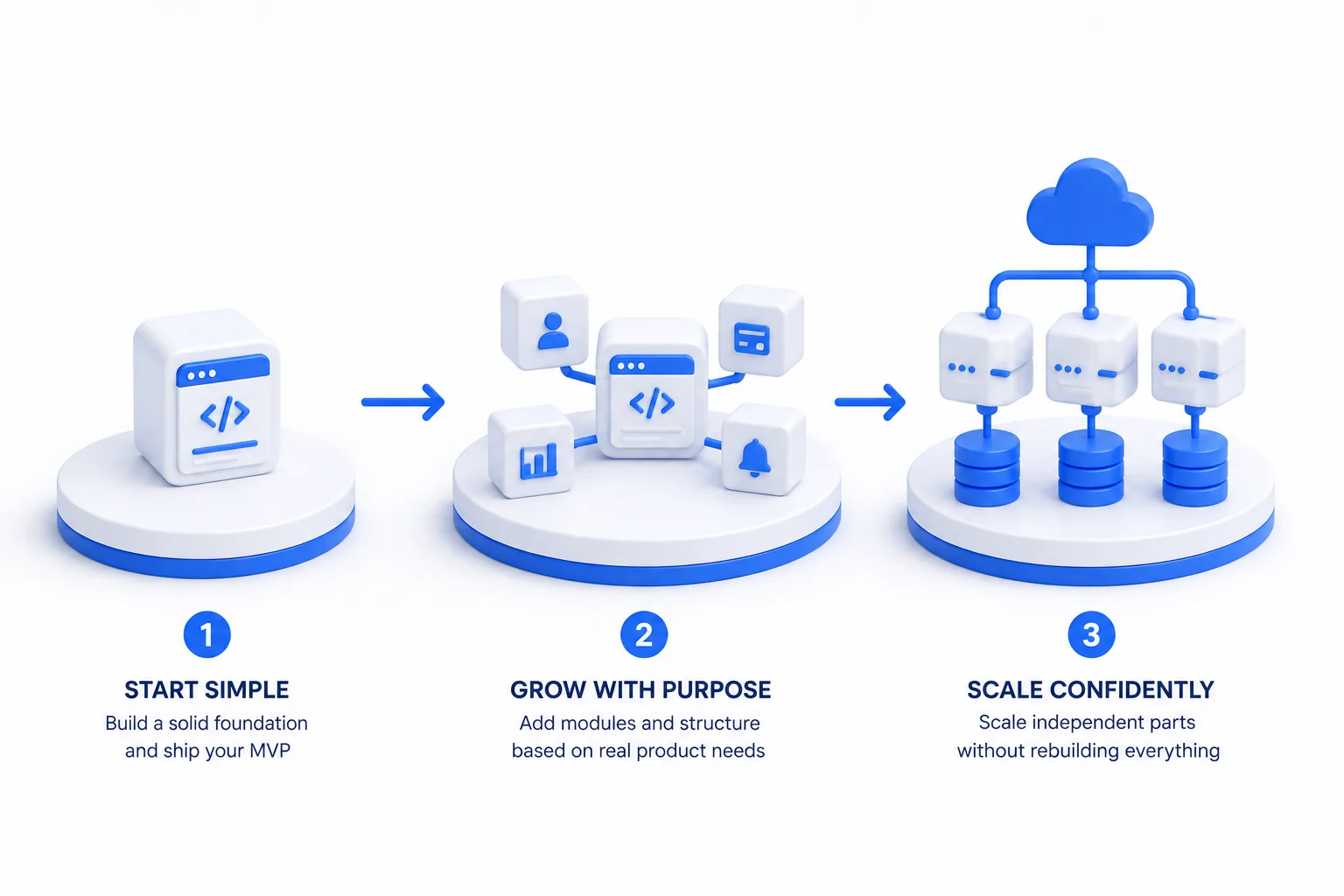
This distinction matters. API-first is a design principle. Microservices are an architectural decision. You can build an API-first SaaS application as a well-structured monolith. For many early-stage products, that's exactly what makes sense. A practical architecture could be: Web / Mobile → Application API → Modular Business Logic → Database + External Services. You still get clear boundaries without introducing the operational complexity of distributed systems. Start with clear boundaries, not maximum complexity.
Design the Contract Before the Code
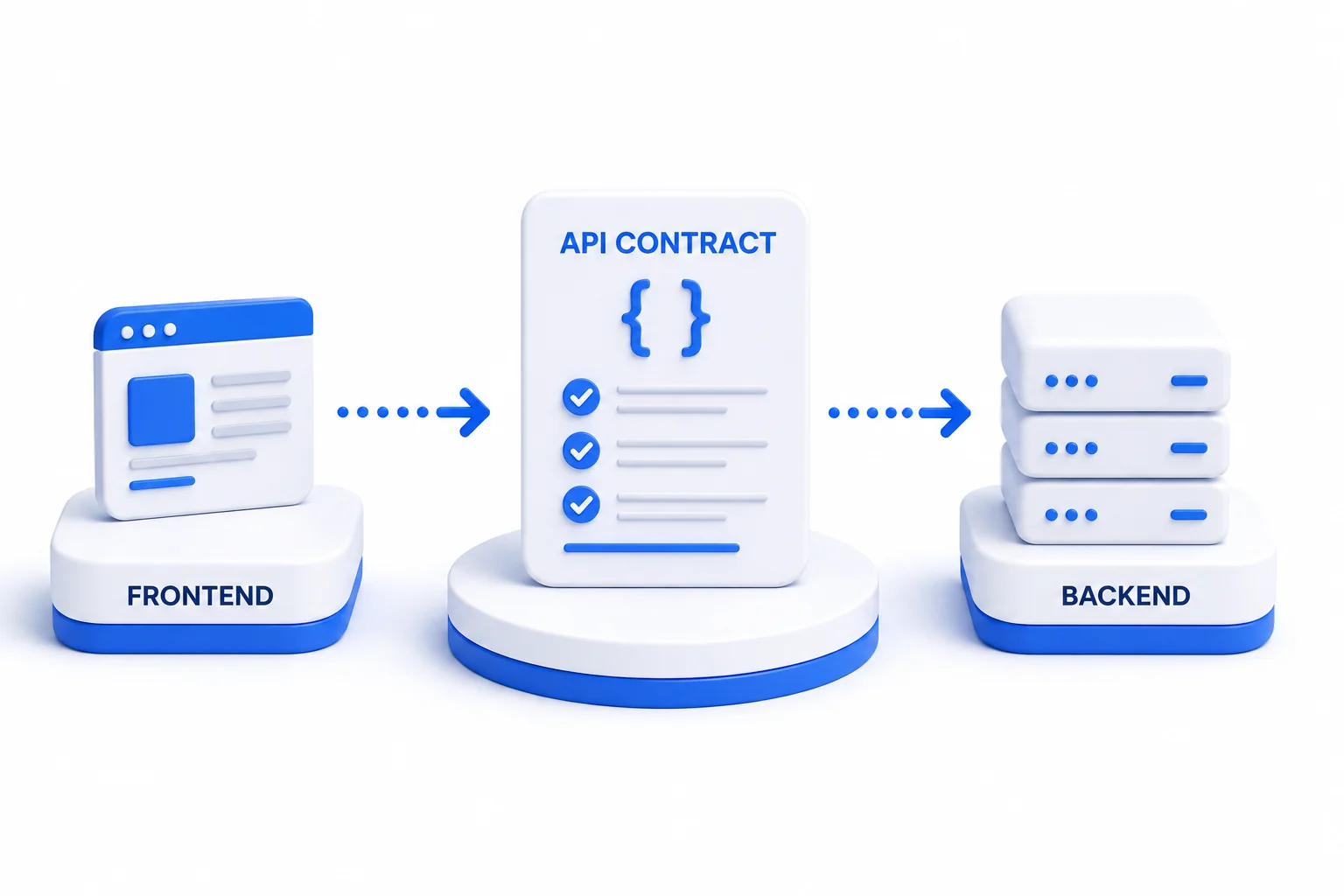
One of the most useful API-first habits is deciding how a capability should behave before worrying about exactly how it will be implemented. Suppose you're building subscription management. Instead of beginning with database tables, think about what the product needs to do: GET /subscriptions/{id}, POST /subscriptions, POST /subscriptions/{id}/cancel. Then define the contract — what does the client send? What does a successful response contain? What errors should the client expect?
Once these decisions are clear, frontend and backend development can move against the same contract. This is one of the practical benefits of API-first development: teams can agree on the interface before implementation details become dependencies.
Keep Business Logic Behind the API
Imagine your web application decides whether a customer is allowed to cancel a subscription. Later, you launch a mobile application — now the same rule needs to exist there. Then you add a partner integration. The rule exists in three places. That's how inconsistency begins.
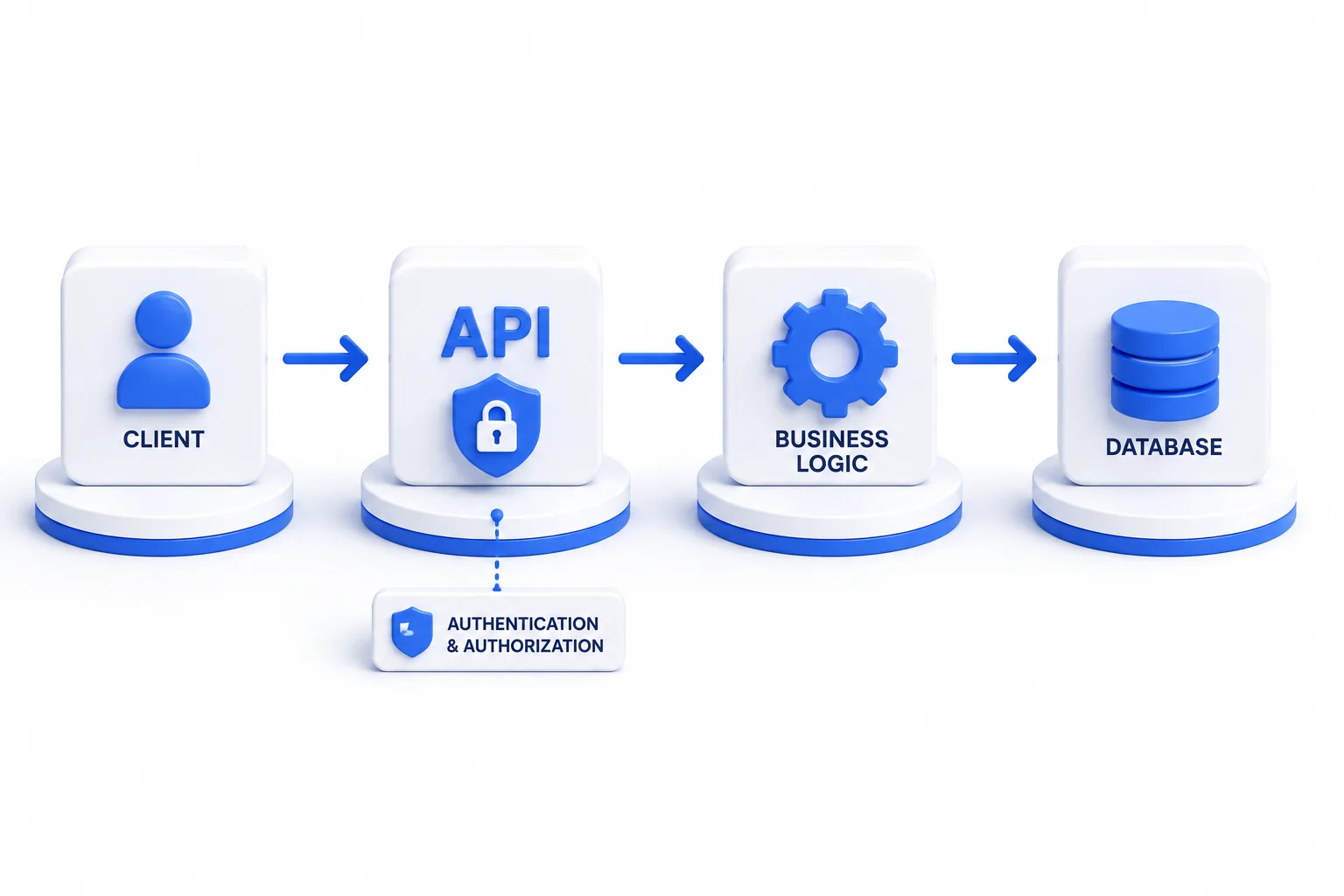
Instead, the backend should own the decision: Client → API → Authorization → Business Logic → Result. Every client receives the same result from the same rules. The client should present the product. The backend should enforce how the product works.
Build APIs Around Product Capabilities
A common mistake is designing APIs as direct reflections of database tables. Your database represents how information is stored. Your API should represent what the product can do. Consider POST /invoices/{id}/approve — that's a business capability. Behind that endpoint, the application might verify permissions, check invoice status, apply business rules, update the database, create an audit record, trigger a notification, and return the result. The client doesn't need to know how those operations are implemented. Your implementation can evolve while the capability remains predictable.
Design Security, Errors, and Change Early
Authentication and Authorization. Every request should answer two questions: who is making this request, and are they allowed to perform this action? These rules belong on the server. Hiding a button in the frontend is not authorization. If a user isn't allowed to delete a project, the API should reject the request regardless of which client sends it.
Predictable Errors. Clients need to understand failures. Instead of returning "Something went wrong," return something the application can handle — like SUBSCRIPTION_ALREADY_CANCELLED. Good APIs distinguish between invalid input, missing resources, insufficient permissions, conflicts, rate limits, and internal failures.
Backward Compatibility. Your SaaS product will change. Adding an optional field is usually safer than changing the meaning of an existing one. When breaking changes become unavoidable, versioning can provide a migration path. A stable API becomes an asset as more clients begin depending on it.
Don't Turn Everything Into an API
API-first can be overengineered too. Not every function needs an endpoint. Not every module needs to become a service. Every interface you expose creates additional requirements around security, testing, documentation, monitoring, maintenance, and compatibility. Create APIs around meaningful boundaries and capabilities. Keep implementation details internal. The goal isn't to build the largest API surface possible — it's to create the smallest set of stable contracts the product actually needs.
Why API-First Makes Integrations Easier
Most successful SaaS products eventually need to communicate with other systems. Without clear APIs, every integration can become a custom engineering project. With a stable API, external systems can interact with controlled product capabilities without needing access to internal implementation details. Instead of external systems reaching directly into your database, you want: External System → Authorized API → Business Logic → Data. The same security and business rules continue to apply.
API-First Also Makes Your SaaS More AI-Ready
There is now another potential consumer of your APIs: AI. An AI agent might need to retrieve a customer record, create a support ticket, search documents, update a CRM, retrieve an invoice, or trigger a workflow. A well-designed API gives AI controlled access to specific capabilities. Instead of allowing an AI system to interact directly with your database: AI → Authorized API → Business Logic → Data. The application still controls permissions, validation, logging, and business rules.
When Should You Introduce Microservices?
Not because they're popular. And not because you might have millions of users someday. Microservices become useful when the system has an actual reason to distribute responsibilities — for example: different scaling requirements (one workload needs significantly more resources), independent deployment (a team needs to release one component without coordinating with the whole), reliability isolation (failure in one capability should not affect another), or clear team ownership (different teams own different business domains).
Until those pressures exist, a modular application may be much easier to build, deploy, monitor, and debug. A modular monolith is a legitimate alternative or intermediate step before microservices — not a failure to plan.
What Does a Scalable SaaS Architecture Actually Need?
Scalability isn't a specific technology stack — it's the ability of the product to evolve when requirements change. A strong SaaS foundation typically needs: clear API contracts (clients shouldn't depend on internal implementation details), centralized business logic (rules should behave consistently across clients), server-side security, predictable failures, observability, modular boundaries, and backward compatibility.
Notice what's missing. You don't automatically need Kubernetes, microservices, or ten databases. Good architecture isn't measured by how impressive the architecture diagram looks. It's measured by how safely the product can change.
Conclusion
API-first development isn't about predicting what your SaaS platform will look like five years from now. It's about creating boundaries that make future changes less expensive. Start simple. Define clear contracts. Keep business logic behind the API. Centralize security. Make failures predictable. Expose only what needs to be exposed. Then introduce complexity when real product requirements justify it.
A scalable architecture isn't one that starts complicated. It's one that can become more sophisticated without requiring the entire product to be rebuilt.
At Seawolf Intelligent Computing, we design and build production-grade APIs, SaaS platforms, and AI systems with architecture that can evolve alongside the product. Building a SaaS product — or dealing with an architecture that's becoming difficult to change? Tell us what you're building. We'll help you design the right boundaries before complexity becomes expensive.
Frequently Asked Questions
What does API-first actually mean in practice?
It means the API contract — the shape of inputs, outputs, and error states — is defined before any implementation begins. Teams agree on what each endpoint returns and how it fails before the server is written. This forces important decisions early, when they're cheap to change, rather than after integration has begun and changes are expensive.
Does API-first require microservices?
No. API-first is a design principle, not an architectural decision. You can build a fully API-first SaaS product as a well-structured monolith. For early-stage products, a modular monolith is often the right choice — clear internal boundaries without the operational complexity of distributed systems. Microservices are worth introducing when there's a specific, real reason: different scaling requirements, independent deployment needs, or clear team ownership boundaries.
How should business logic be handled in an API-first architecture?
Business logic belongs behind the API, not in clients. If the web app decides whether a user can perform an action, that rule needs to be duplicated in every other client — mobile, integrations, AI agents. When the rule changes, it needs to change everywhere. Centralizing logic behind the API means one implementation, consistent behavior across all consumers, and a single place to audit and update rules.
How do you handle API versioning without breaking existing clients?
Additive changes — new optional fields, new endpoints — are generally safe. Breaking changes require a versioning strategy: introduce the new version, give existing consumers a deprecation window, then retire the old version. The key is communicating changes clearly and not silently altering the behavior of existing endpoints. For AI systems specifically, model version should be included in every response so clients can detect behavioral changes after a retrain.
When does it make sense to expose a public API vs. keeping it internal?
Every public API surface creates ongoing maintenance obligations: security, documentation, backward compatibility, and support. Expose only capabilities that external consumers genuinely need. Internal APIs can change more freely. If you're unsure whether a capability should be public, start internal and promote it later — the reverse is much harder once external clients depend on it.